Cart
0

In our earlier piece, Sea Moss: Separating the Research from the Hype, we made the case that pairing sea moss with spore-forming probiotics that have clinical research behind them is a more defensible approach than asking sea moss to do a probiotic's job on its own. This article is about one of those strains specifically: Bacillus coagulans, and what the actual randomized trial data shows about its use for digestive symptoms, including IBS.
What Makes Bacillus Coagulans Different
Most familiar probiotic strains — the Lactobacillus and Bifidobacterium species found in yogurt and standard capsules — are vulnerable to stomach acid. A meaningful portion of the dose can die before it ever reaches the intestines, which is part of why dosing and delivery matter so much for whether a probiotic actually does anything once swallowed.
Bacillus coagulans is a spore-forming bacterium. Instead of existing as a fragile live cell, it forms a protective spore coating that allows it to survive the acidic environment of the stomach largely intact. Research using a computer-controlled model of the human gastrointestinal tract found that a specific Bacillus coagulans strain survived passage through the stomach compartment at a 97% rate, with germination into the metabolically active form occurring predominantly in the small intestine. Other published research on the species more broadly reports an average germination window of 4 to 6 hours after oral administration, with roughly 85% of spores successfully reaching the intestine.
This is a genuine structural advantage over non-spore-forming strains, and it's the main reason Bacillus coagulans has drawn specific clinical interest for digestive conditions like IBS — a strain has to actually arrive intact and become active in the gut before it can have any chance of helping.
One honest limitation worth naming here: Bacillus coagulans does not appear to colonize the intestine long-term. Research on the species describes it as having weak adhesion to intestinal epithelial cells, with most of it cleared through normal digestion within 4 to 7 days. That means consistent, regular intake — not a one-time dose — is what the research actually supports.

The Clinical Trial Data
Majeed et al., 2016 — Nutrition Journal
This double-blind, randomized, placebo-controlled pilot study enrolled 36 patients with diarrhea-predominant IBS. Participants receiving Bacillus coagulans MTCC 5856 showed significant improvement in IBS symptom scores within 8 weeks. Notably, 18% of participants in the treatment group reported total symptomatic relief, and 64% reported considerable relief — meaningfully higher than the placebo group.
Bacillus coagulans BCP92 — randomized, double-blind, multicenter trial, 2024
This more recent trial tested a different named strain, BCP92, in 100 IBS participants over 12 weeks. Results showed significant improvement in overall IBS severity and gastrointestinal symptom frequency compared to the control group (p < .001), along with significantly improved stool consistency and a notable reduction in reported mental stress. The larger sample size and the fact that a second, distinct strain produced similar results strengthens the overall pattern for the species — while still reflecting a genus/species-level trend rather than proof that every Bacillus coagulans strain performs identically.
Bacillus coagulans + prebiotic synbiotic — randomized, placebo-controlled trial
Worth flagging precisely: this trial tested a synbiotic — Bacillus coagulans combined with a prebiotic fiber — not the bacterial strain alone, in 85 IBS patients over 12 weeks (56 completed the full study). The synbiotic group saw a significantly greater reduction in abdominal pain frequency and diarrhea frequency compared to placebo, though constipation-symptom improvement was similar between both groups. This trial is useful evidence for the combination approach — pairing a spore-forming probiotic with fiber for it to feed on — but it isn't a clean test of Bacillus coagulans in isolation, and that distinction matters for how the evidence should be read.
Bacillus coagulans SNZ 1969 — randomized controlled trial, mild intermittent constipation
This trial specifically examined healthy adults with mild intermittent constipation (a different population than the IBS-diagnosed patients in the studies above), testing whether daily B. coagulans supplementation improved intestinal motility and constipation symptoms via changes in gut microbiota. This adds a data point for constipation specifically, in a broader population than IBS alone.
For additional context: a systematic review and meta-analysis of probiotics and synbiotics for chronic constipation, spanning 30 RCTs on probiotics, found an overall response rate of 57% with probiotic treatment versus 44% with control — a statistically significant but moderate effect, with substantial variation between individual studies.
What This Means, Honestly
A few things are worth being direct about:
- The sample sizes are still modest. 36, 85, and 100 participants are meaningful pilot and early-stage trial sizes, but they're not the scale of a large Phase 3 pharmaceutical trial. This is genuinely promising evidence, not settled science.
- Strain matters, and so does formulation. MTCC 5856, BCP92, and SNZ 1969 are different named strains of the same species, tested independently — the fact that multiple strains show positive results strengthens the species-level case. But the synbiotic trial is a reminder that "Bacillus coagulans" alone and "Bacillus coagulans plus a prebiotic fiber" are two different interventions with two different evidence bases, even when both get casually described as "probiotic studies."
- IBS is heterogeneous, and doesn't fully overlap with general constipation. These trials cover diarrhea-predominant IBS, general IBS severity, and constipation in non-IBS populations somewhat separately. None of them should be read as a single blanket claim that Bacillus coagulans resolves every digestive complaint equally.
- Consistency matters given the clearance timeline. Since Bacillus coagulans doesn't establish long-term residency in the gut, the research supports daily, ongoing intake — not an occasional or as-needed approach.
Why This Connects Back to Sea Moss
Sea moss's fiber can reasonably be expected to feed the gut bacteria already present in your system — a real, if modest, contribution. What it can't do on its own is add a new spore-forming probiotic the way Bacillus coagulans does. These are genuinely different mechanisms, doing different jobs — and notably, the synbiotic trial above suggests that pairing a fiber source with a spore-forming probiotic may work better together than either studied alone, which is exactly the rationale behind combining sea moss with spore-forming probiotics rather than treating them as substitutes for each other.
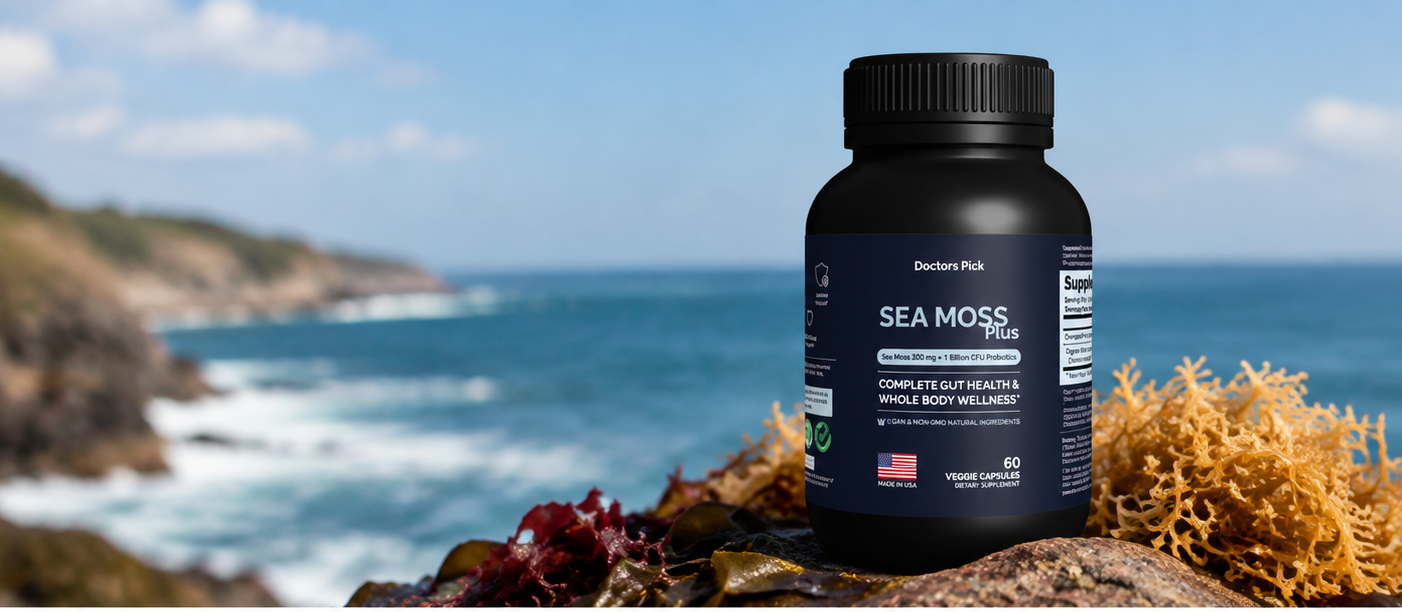
Sea Moss Plus pairs organic Irish sea moss with ProbioSEB Duo™, a blend of two spore-forming probiotics: Bacillus coagulans, the species covered in this article, and Bacillus subtilis. Trial results are specific to the strains tested, so this research shows what the species can do — it isn't a guarantee for any one product.
These statements have not been evaluated by the Food and Drug Administration. This product is not intended to diagnose, treat, cure, or prevent any disease.

Sources
Clinical trials — IBS and constipation:
- Majeed M, et al. — "Bacillus coagulans MTCC 5856 supplementation in the management of diarrhea predominant Irritable Bowel Syndrome," Nutrition Journal, 2016 — link
- "Role of Bacillus coagulans (Heyndrickxia coagulans) BCP92 in managing irritable bowel syndrome: A randomized, double-blind, multicenter, placebo-controlled clinical trial" — PubMed
- "The efficacy of a synbiotic containing Bacillus Coagulans in treatment of irritable bowel syndrome: a randomized placebo-controlled trial" — PMC
- "Spore-forming Bacillus coagulans SNZ 1969 improved intestinal motility and constipation perception mediated by microbial alterations in healthy adults with mild intermittent constipation: A randomized controlled trial" — ScienceDirect (also the source of the 30-RCT meta-analysis figures: "Probiotics and synbiotics in chronic constipation in adults: A systematic review and meta-analysis of randomized controlled trials")
Spore survival and mechanism:
- "Spores of Bacillus coagulans GBI-30, 6086 show high germination, survival and enzyme activity in a dynamic, computer-controlled in vitro model of the gastrointestinal tract" — PubMed
- "Bacillus Coagulans — an overview," ScienceDirect Topics (germination timing, ~85% intestinal arrival rate) — link
- "Progress of research and application of Heyndrickxia coagulans (Bacillus coagulans) as probiotic bacteria," Frontiers in Cellular and Infection Microbiology, 2024 (transient colonization, 4–7 day clearance) — link